A RICH HISTORY
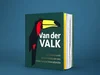
Anyone who walks into Van der Valk today sees modern hotels and restaurants, extensive facilities and of course the familiar toucan. Behind that recognizable image lies a family history that goes back generations.
A story about entrepreneurship, seeing opportunities, working together and giving guests a place where they feel welcome.
Van der Valk was officially founded in 1929, when Martinus van der Valk took over De Gouden Leeuw in Voorschoten. Together with his wife Rie, he laid the foundation for a family business in which food, overnight stays and hospitality became increasingly closely intertwined.
The roots in Voorschoten
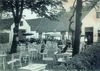
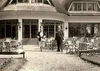
The family history already begins in 1862. That year, Nicolaas van der Valk bought the farm De Gouden Leeuw on Veurseweg in Voorschoten. Over the years, the dairy room in the farm grew into a café.
After Nicolaas died in 1902, his second wife Elisabeth Groenewegen continued De Gouden Leeuw. She kept the business running for many years. As a result, her youngest son Martinus grew up in an environment in which family, work and welcoming guests were constantly interwoven.
From 1926 onwards he took over more and more tasks. In 1929 Martinus took over De Gouden Leeuw for 12,000 guilders. That year is considered the official founding of Van der Valk.
Martinus and Rie: at the helm together
Martinus was a versatile entrepreneur and saw opportunities everywhere. Rie was at the heart of the daily operations of De Gouden Leeuw and ran the café.
Together they further shaped the business.
Martinus wanted guests to be able to eat just as well as the family did at home. Rie brought that idea to the table: she cooked for the guests and in doing so helped determine the first menu.
Rie also played an important role in the creation of the hotel. She proposed creating bedrooms above De Gouden Leeuw. In this way, overnight stays increasingly became part of the business alongside food.
Martinus and Rie had 11 children. For them, De Gouden Leeuw was not only their home, but also the place where from a young age they learned to work, to do business and to welcome guests.
When Veurseweg was widened around 1939, the old Gouden Leeuw had to be demolished. A little further back the family built a new building with eight hotel rooms. Development was interrupted by the Second World War, but after the war the family brought the damaged business back to life together.
That habit of tackling things together would continue to characterize the family.
A business of their own for each child
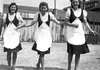
Martinus wanted his children ultimately to be able to run their own businesses. His idea was simple: a business of their own for each child.
From the 1940s onwards the family spread further and further across the Netherlands. Children and in-laws got their own locations and developed them further in their own way.
These were not always ready-made success locations. It was precisely in places where much still needed to be done that the family saw opportunities. And whenever a new business was almost ready somewhere, the rest of the family helped to make sure the doors could open on time.
In this way, Van der Valk did not grow as a centrally managed hotel chain, but as an ever-larger family of entrepreneurs.
The toucan and the step across the border
In the mid-1950s that growth acquired a recognizable face.
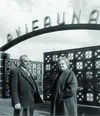
In 1956 Martinus took over the bird park Avifauna in Alphen aan den Rijn. Around the same time, the family was looking for a shared symbol for the different locations. The choice fell on the toucan, which would grow into the logo of Van der Valk
The family also saw opportunities outside the Netherlands.
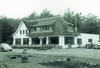
In 1958 daughter An and her husband Ben Wohrmann left for Brasschaat in Belgium. At Dennenhof, thirty wooden motel rooms were built.
In 1966 Spain followed with Hotel Barcarola on the Costa Brava and in the 1970s Van der Valk also gained a permanent presence on the French Côte d’Azur.
Meanwhile, the motel concept also continued to develop. During travels through America, Gerrit van der Valk had seen how practical motels along important traffic routes could be: easy to reach, parking at the door and food and overnight stays in one place.
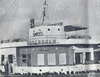
In 1968 Motel Nuland opened, the first Van der Valk location that was entirely designed and built by the family itself.
Germany followed later, where Moers became the first Van der Valk location in 1986. In 1989 the family took another step across the border with the opening of the first Van der Valk Hotel in the Netherlands Antilles.
By then the toucan could be found far beyond the Netherlands.

New generations continue building
When Martinus died in 1969, the next generation continued building on what he and Rie had started together.
Brothers, sisters, partners and later also their children each took responsibility for their own businesses. At the same time, Rie continued to play an important connecting role within the family.
With every generation new locations were added and the family became larger. What once began from a single place in Voorschoten thus developed into a family of entrepreneurs, each with their own ideas and the freedom to seize opportunities.
The well-known roadside restaurants and motels grew into modern hotels with spacious rooms, contemporary restaurants, conference and meeting facilities, wellness and leisure. In addition to locations along major traffic routes, city hotels and more and more international locations were added.
Today the fourth and fifth generations work side by side. Young family members are taking over the baton, further developing existing hotels and building new locations.
What began in 1929 at De Gouden Leeuw has now grown into around 120 hotels and restaurants at home and abroad, with thousands of employees.
Much has changed.
But the foundation has remained recognizable: seeing opportunities, tackling things together and ensuring that guests feel welcome.
What Martinus and Rie started together is thus still being passed on from generation to generation.